When wildfires are reported, let’s not make it sound like they are inevitable.
I don’t want to use this blog as a soap box to rail about human impact on nature, wildlife, wilderness and our biosphere, but I will just say it again and then stop.
When wildfires are reported. Let’s not make it sound like they are inevitable.
They aren’t.
The offending ratio is around eighty-five percent human-caused to fifteen percent lightning-caused. The human actions are: flagrant flitting of cigarette butts, open random fires in undesignated spots, and debris burning.
No need for me to give the people committing these actions adjectives and expletives. If you’re reading this, you, too, are probably fuming.
On that note, sort of, here’s a revised piece I wrote for the Friends of Killarney Park some time ago.
***
Deep Ecology can make you wise
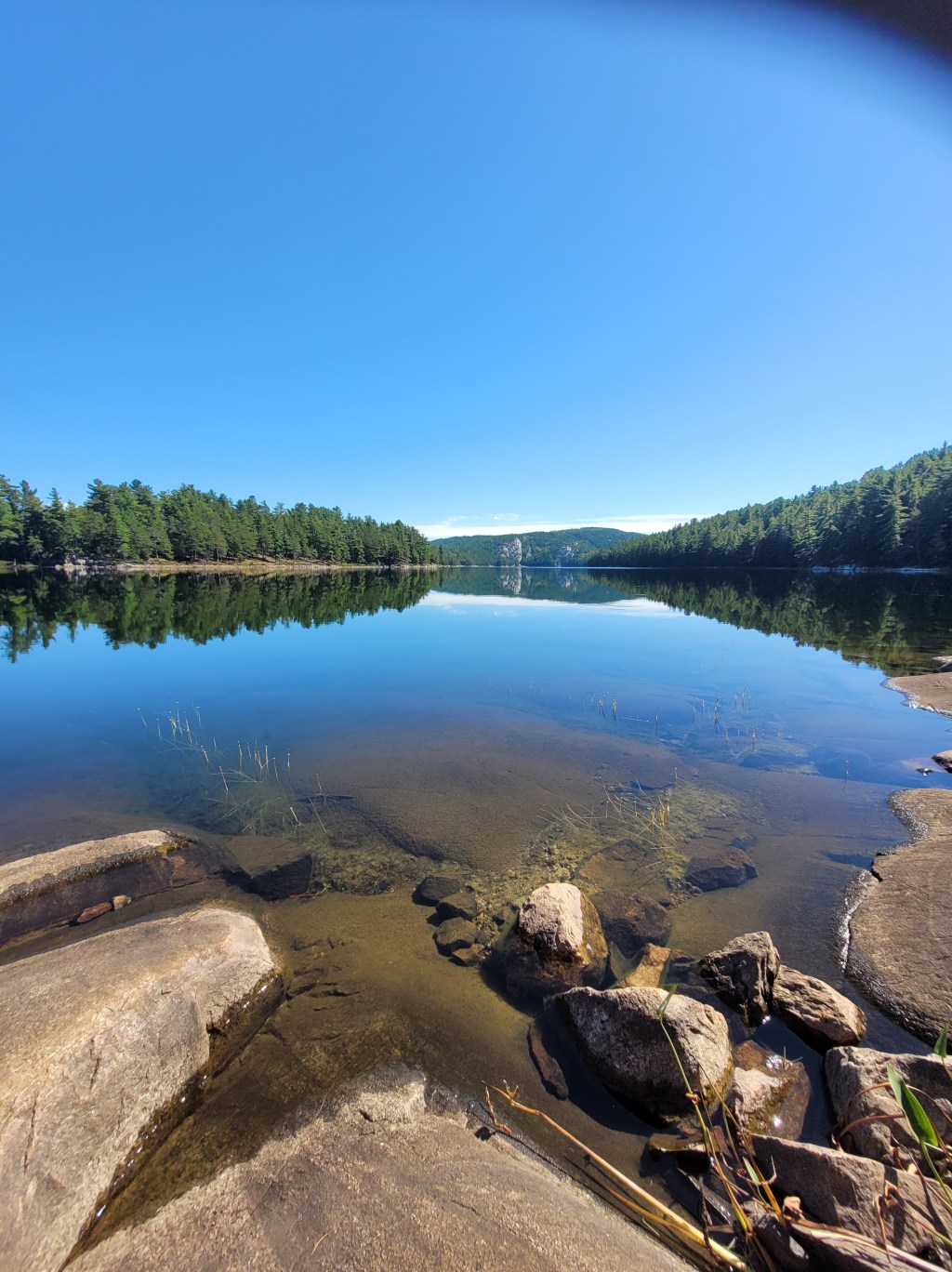
My friend, Frank the scientist, and I were enjoying a Killarney paddle one evening in August, just as the summer heat was mellowing. We were discussing Deep Ecology, a movement that started in the 70s. Frank explained the Deep Ecology view that humans are but one of several million species on the planet.
“With Deep Ecology, all species have intrinsic value. For example, those trees you see across the marsh over there. Although we humans tend to value the trees for their firewood or shade or oxygen-production, they have value aside from our needs. It’s a worldview.”
Frank has spent the better part of his life studying habitats around the world working with scientists and indigenous peoples in nature conservancy. He shared his fears.
“Did you know that it takes about 5.3 liters of water to produce a typical single-use water or soda bottle?” he asked.
The image of folks here in Canada and in water-poor countries suffering water shortages or dipping into fetid water while tons of beautiful water gush through machines to make plastic bottles made me shudder. My mind shot to the wasteland of plastic water bottles strewn in lakes and forests. If I stood in a line representing the 195 countries in the world, in order of water consumption, I’d be second in line. I wanted to shout: Don’t use water to clean your driveway. Don’t rinse so much.
Frank went on: “Look at Killarney lakes and rivers. They’re so beautiful. But fifty percent of the planet’s rivers are drowning in chemical waste. Over a third of the planet’s forests have been lost in the last 50 years. That’s an area greater than all of North America.”
A surge of fear welled up in my throat. (As I write, Jasper burns.) The day before, I’d paddled alone. On Freeland Lake, sunlight fluttered on the rippling water. At the grassy edge, the massive blue heron took flight. The wind rustled through white pines, bouncing their cushiony boughs in slow motion. The heron circled over the water and then flew deftly into the forest through an opening I couldn’t discern—with that awesome wing-span? —and then disappeared. I felt a shift into a silent vibrant dimension. I disappeared.
“Was that Deep Ecology?” I asked Frank.
“That was what Arne Naess, the father of Deep Ecology called spontaneous experience—a spiritual, intellectual and physical experience that can happen to people in the heart of nature. Those experiences can change you.”
True. I’d felt a rare rightness—instinct wisdom—on Freeland with the blue heron. And I can tap into it even today. It’s kinship.
***
At the time of writing this, I am in my beloved Killarney with my friend Mary Ann. We are preparing for our annual back-country paddle into the wilderness.

Out there, Mary Ann and I often come across signs of random open fires. Imagine pulling up to a pristine granite shelf and saying to your companion: Hey, let’s make a fire. But hold on—it’s hot out, it’s light out, you’re not frying up lunch, and it’s not allowed. But you have to make your mark, despite knowing that Jasper (and a hundred other forests) burns. Then, you gaily shove off, leaving your mark behind.
Mary Ann and I dismantle them, blackened rock by blackened rock, charr by charr. And we spare no expletives.
See you in September.
 Valerie Hickey, Writer
Leave a comment